
- Compare agents
- Online valuation
- Explore my area
- Home toolkit
- News & guides


- Estate agents by area
- Sold house prices by area
- Estate Agent ValuationRequest an in-person valuation with an agent to discover your property's true market value.
- Online Valuation ToolGet a free instant estimate of your home's value.
- EPC CheckerFind out if your home has a valid Energy Performance Certificate.
- Listing MonitorAlready on the market? See how your online property advert is performing.
- Selling guides
- Estate agent guides
- Mortgage advice
- Conveyancing guides
- Property news See All News & Guides
Agent shortlist
HouseWorth
- How Much are Conveyancing Fees in 2026?
Conveyancing help and guides12 May 2026
How Much are Conveyancing Fees in 2026?
Sam Edwards
Content Marketing Manager

Estimated reading time: 6 minutes
Table of contents
- 1. At a glance
- 2. What is conveyancing?
- 3. What do conveyancing fees cover?
- 4. Average conveyancing fees for sellers in 2026
- 5. Average conveyancing fees for buyers in 2026
- 6. What is the difference between a solicitor and a licensed conveyancer?
- 7. No sale, no fee conveyancing
- 8. How to get quotes and what to check
- 9. How conveyancing fits into the selling process
- 10. How conveyancing costs fit into the total cost of selling
- 11. Choosing the right estate agent before conveyancing begins
- 12. FAQs
At a glance
Conveyancing fees are the legal costs of transferring property ownership from seller to buyer. For sellers, fees typically range from £1,000 to £2,500. For buyers, fees are generally higher - usually £1,500 to £3,500 - because of the additional legal work involved, including property searches and mortgage checks. Both buyer and seller instruct their own solicitor, and each pays their own fees independently.
What is conveyancing?
Conveyancing is the legal process of transferring ownership of a property. It covers everything from checking the title deeds and preparing contracts, to carrying out searches and completing the transfer on completion day. A conveyancing solicitor or licensed conveyancer handles this on your behalf.
Conveyancing is required for all property sales in England and Wales. The process is overseen by the Solicitors Regulation Authority (SRA) for solicitors and the Council for Licensed Conveyancers (CLC) for licensed conveyancers. Both are equally qualified to carry out residential conveyancing.
For a broader overview of the selling process, see our guide to how to sell your house.
What do conveyancing fees cover?
Your total conveyancing cost is made up of two parts:
- Legal fees: The solicitor's own charge for the work they carry out. This covers reviewing the title, preparing or reviewing contracts, raising and answering enquiries, and managing the exchange and completion.
- Disbursements: Third-party costs that your solicitor pays on your behalf, such as Land Registry fees, search fees and bank transfer charges.
These two components should both be included in any written quote. Always check whether a quote covers both before comparing figures.
Average conveyancing fees for sellers in 2026
For sellers, conveyancing fees typically range from £1,000 to £2,500, including disbursements. The main factors that affect the cost are:
- Property value - higher value properties generally cost more to convey
- Property type - leasehold properties cost more than freehold, due to additional checks on the lease, service charges and freeholder requirements
- Whether you are selling only or selling and buying simultaneously - combined transactions cost more in total
- Location - solicitors in London and the South East often charge more than those elsewhere in the UK
Disbursements
Typical seller disbursements include:
| Disbursement | Typical cost |
|---|---|
| Land Registry title register | £3 - £6 |
| Bank transfer (CHAPS) fee | £25 - £45 per transfer |
| ID verification | £10 - £30 |
| Anti-money laundering check | £10 - £20 |
Average conveyancing fees for buyers in 2026
For buyers, conveyancing fees are typically higher than for sellers - usually £1,500 to £3,500 - because of the additional work involved, including ordering and reviewing property searches and checking the mortgage offer.
Disbursements
Typical buyer disbursements include:
| Disbursement | Typical cost |
|---|---|
| Local authority search | £50 - £250 (varies by council) |
| Water and drainage search | £30 - £60 |
| Environmental search | £30 - £50 |
| Land Registry registration fee | Varies by property value |
| Bank transfer (CHAPS) fee | £25 - £45 |
| ID verification | £10 - £30 |
Land Registry registration fees are set by HM Land Registry and vary by property value. The current fee scale is published at gov.uk. On a £300,000 purchase, the registration fee is currently £135.
Note: Stamp Duty Land Tax (SDLT) is a separate government tax paid by the buyer on completion. It is handled by the conveyancing solicitor but is not part of their fee.
What is the difference between a solicitor and a licensed conveyancer?
Both are qualified to carry out conveyancing for residential property transactions:
- A solicitor is a fully qualified lawyer specialising in property law. Regulated by the Solicitors Regulation Authority.
- A licensed conveyancer specialises exclusively in property transfers. Regulated by the Council for Licensed Conveyancers.
For a standard residential sale or purchase, either is equally qualified. The more important consideration is their track record for communication, speed and value.
No sale, no fee conveyancing
Some solicitors offer a 'no sale, no fee' arrangement, meaning no legal fee is charged if the transaction falls through before exchange. This provides useful protection given that a proportion of sales collapse before contracts are exchanged.
Remember: The terms of any 'no sale, no fee' offer should be read carefully. They sometimes only apply when the transaction falls through for reasons outside the client's control, and disbursements already incurred may still be charged.
How to get quotes and what to check
It is worth getting at least three quotes before instructing a conveyancer. When comparing quotes:
- Check whether the quote includes disbursements or covers legal fees only - some firms quote legal fees alone and add disbursements separately
- Confirm whether VAT is included - conveyancing fees are subject to 20% VAT
- Ask whether a 'no sale, no fee' option is available
- Check the solicitor's reviews and how they communicate - by phone, email or online case tracking
The Law Society has a find-a-solicitor tool that allows buyers and sellers to search for regulated property solicitors by location. Always verify that any solicitor or licensed conveyancer you instruct is regulated before committing.
How conveyancing fits into the selling process
For sellers, the conveyancing process begins once an offer is accepted. The seller's solicitor prepares the contract pack, responds to enquiries from the buyer's solicitor, and manages the process through to exchange and completion.
For buyers, the conveyancing process begins at the same point. The buyer's solicitor orders searches, reviews the contract, reports on the mortgage offer and manages the transfer of funds on completion day.
The conveyancing process typically takes 12-16 weeks from offer accepted to completion. Delays are most commonly caused by slow solicitors on either side, complex chains or issues identified during searches. For a full walkthrough of the selling process from start to finish, see our guide to how to sell your house.
How conveyancing costs fit into the total cost of selling
Conveyancing fees are one of the main costs of selling a property, alongside the estate agent's fee. Before selling, it is also worth getting a free property valuation to understand what the property is worth. GetAgent's free online valuation tool gives an instant estimate based on recent local sales data.
Choosing the right estate agent before conveyancing begins
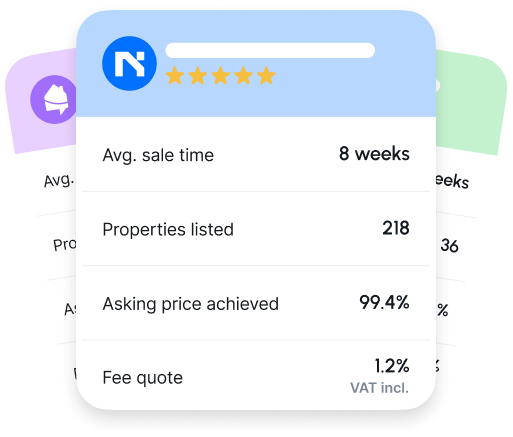
The estate agent you choose to sell the property has a direct influence on how smoothly the conveyancing process runs. A proactive agent who chases solicitors and keeps the chain moving significantly reduces the risk of delays. GetAgent's comparison tool shows the performance of every local agent - including average sale time and percentage of asking price achieved - based on real completed sales. Compare local estate agents before deciding who to instruct.
For background on sold prices and property market data, HM Land Registry publishes all completed residential property sales in England and Wales.
For guidance on buyer and seller rights during the conveyancing process, Citizens Advice provides a clear overview of what to expect and what to do if problems arise.
FAQs
How much are conveyancing fees in 2026?
For sellers, conveyancing fees typically range from £1,000 to £2,500, including disbursements. For buyers, fees are generally higher at £1,500 to £3,500, due to the additional work involved in searches, mortgage checks and Land Registry registration.
Who pays conveyancing fees - buyer or seller?
Both the buyer and the seller pay their own conveyancing fees independently. Each party instructs their own solicitor and pays its own legal costs. Neither contributes to the other's fees.
What are disbursements in conveyancing?
Disbursements are third-party costs that the solicitor pays on the client's behalf. For sellers, these typically include Land Registry title checks and bank transfer fees. For buyers, they include property searches, Land Registry registration fees and ID checks. All disbursements should be itemised in the solicitor's quote.
When do you pay conveyancing fees?
Most solicitors deduct their fees and disbursements from the sale proceeds on completion day, handled by the conveyancing solicitor. Some may ask for a payment on account upfront to cover disbursements as they are incurred. Always check the payment terms before instructing.
Are conveyancing fees tax-deductible?
For sellers of a primary residence, conveyancing fees are not tax-deductible. For sellers of a buy-to-let or investment property, fees may be deductible as an allowable cost against Capital Gains Tax. A qualified tax adviser should be consulted for specific circumstances.
Is a local solicitor cheaper than an online conveyancer?
Not necessarily. Online and panel conveyancers often charge less than local high street solicitors due to lower overheads. The location of the solicitor makes no legal difference to the transaction, as long as they are regulated by the SRA or CLC and have a good track record for communication and speed.
How much are conveyancing fees on a £300,000 house?
For a seller, typical conveyancing fees on a £300,000 property would be around £1,200 to £1,800, including disbursements. For a buyer, fees including searches and Land Registry registration would typically be around £1,800 to £2,500. Quotes vary between solicitors, so it is worth comparing at least three.
Thinking about
selling your home?
Picking the right estate agent is vital for a successful sale. GetAgent makes choosing simple. Discover the best performing agents in your area.
- Free
- Data-driven
- No obligation
Thinking about
selling your home?
Picking the right estate agent is vital for a successful sale. GetAgent makes choosing simple. Discover the best performing agents in your area.
- Free
- Data-driven
- No obligation
Compare estate agents
It takes 2 minutes.





Get in touch
020 3608 6556
Our lines are closed
We are a company registered in England & Wales, company number 09428979.
Copyright © 2026 GetAgent Limited