
- Compare agents
- Online valuation
- Explore my area
- Home toolkit
- News & guides


- Estate agents by area
- Sold house prices by area
- Estate Agent ValuationRequest an in-person valuation with an agent to discover your property's true market value.
- Online Valuation ToolGet a free instant estimate of your home's value.
- EPC CheckerFind out if your home has a valid Energy Performance Certificate.
- Listing MonitorAlready on the market? See how your online property advert is performing.
- Selling guides
- Estate agent guides
- Mortgage advice
- Conveyancing guides
- Property news See All News & Guides
Agent shortlist
HouseWorth
- Second Home Stamp Duty - Rates, Rules and Refunds 2026
Conveyancing help and guides29 May 2026
Second Home Stamp Duty - Rates, Rules and Refunds 2026
Daniel Strieff
Writer
Estimated reading time: 19 minutes
Table of contents
- 1. At a Glance
- 2. What is Stamp Duty on a Second Home?
- 3. SDLT Rates for Additional Properties in 2026
- 4. How the surcharge is calculated
- 5. Worked example: buying a £350,000 second home
- 6. Second home purchase
- 7. Main residence purchase
- 8. What Counts as a Second Home for SDLT Purposes?
- 9. Exemptions From the Second Home Stamp Duty Surcharge
- 10. How Stamp Duty Works in Scotland and Wales
- 11. Scotland: Land and Buildings Transaction Tax (LBTT)
- 12. Wales: Land Transaction Tax (LTT)
- 13. Can You Claim a Refund on the Higher SDLT Rate?
- 14. When a refund applies
- 15. How to claim a refund
- 16. Stamp Duty, Divorce and Separation
- 17. Transfers between separating parties
- 18. Buying before the divorce is finalised
- 19. Planning the Full Cost of a Second Property Purchase
- 20. Frequently Asked Questions
- 21. How much is stamp duty on a second home in 2026?
- 22. Does the 5% surcharge apply to buy-to-let purchases?
- 23. Can you get a refund of the higher SDLT rate?
- 24. What counts as a second home for stamp duty purposes?
- 25. Is there any way to avoid the additional property surcharge?
- 26. How does 2nd home stamp duty work in Scotland?
- 27. How does second property stamp duty work in Wales?
- 28. Does buying a property in someone else's name avoid the surcharge?
- 29. What happens to stamp duty when property is transferred during a divorce?
- 30. Will I pay the second home surcharge if I am temporarily between properties?
- 31. References
- 32. FAQs
This article is intended for general information purposes only and does not constitute financial, legal or property advice. We recommend seeking independent professional advice before making any property-related decisions.
At a Glance
Second home stamp duty is the extra SDLT you usually pay when buying an additional residential property in England or Northern Ireland. In 2026, the surcharge is normally 5% on top of standard rates, after increasing from 3% in October 2024, with standard thresholds reverting from April 2025. Refunds or exemptions may apply in limited cases, while Scotland and Wales use separate property tax systems.
What is Stamp Duty on a Second Home?
Stamp Duty Land Tax (SDLT) is the tax the UK government levies on purchases of land and residential property in England and Northern Ireland. It applies when you buy a freehold property, a new or existing leasehold, or a property through a shared ownership scheme. It can also apply where property is transferred in exchange for chargeable consideration, such as taking on responsibility for mortgage debt.
When you purchase a second home, whether a holiday cottage, a buy-to-let investment, or any additional residential property, the government applies a higher rate of SDLT known as the Higher Rates for Additional Dwellings (HRAD) surcharge. This surcharge sits on top of standard SDLT rates and applies to every band of the purchase price, including the portion that would otherwise attract no tax at all.
The second home stamp duty surcharge currently stands at 5%, following the increase announced in the Autumn Budget 2024. Before 31 October 2024, the surcharge had stood at 3% since its introduction in 2016. That two-percentage-point increase substantially changes the upfront cost of buying a second property, and on a mid-range purchase, the difference runs to tens of thousands of pounds.
SDLT does not generally apply to caravans, mobile homes, or houseboats. Most other residential property purchases are subject to the standard rules, including holiday cottages bought outright.
SDLT Rates for Additional Properties in 2026
From 1 April 2025, the temporary SDLT thresholds introduced in September 2022 came to an end, and standard residential bands reverted to their pre-2022 levels. The nil-rate threshold is now £125,000, down from the £250,000 that applied between September 2022 and March 2025.
The current 2nd property stamp duty rates in England and Northern Ireland are as follows:
| Property value | Standard SDLT rate | Second home SDLT rate |
|---|---|---|
| Up to £125,000 | 0% | undefined |
| £125,001 to £250,000 | 2% | undefined |
| £250,001 to £925,000 | 5% | undefined |
| £925,001 to £1.5 million | 10% | undefined |
| Above £1.5 million | 12% | undefined |
Source: HMRC guidance on higher SDLT rates for additional residential properties, checked May 2026.
These rates assume the buyer is UK-resident for SDLT purposes. Non-UK residents may pay an additional 2% SDLT surcharge on top of these rates, so should confirm their position with HMRC or a conveyancing solicitor before relying on estimates.
The surcharge applies to every band, including the first £125,000 that would otherwise attract no standard SDLT. This is one of the most significant distinctions between purchasing a main residence and purchasing a second or additional property.
How the surcharge is calculated
SDLT is calculated progressively, in the same way as income tax. You pay the applicable rate only on the portion of the price that falls within each band, not on the full purchase price. The 5% surcharge is then added to each band individually. Where a buyer purchasing a main residence pays 0% on the first £125,000, a second home buyer pays 5% on that same portion. Where a main residence buyer pays 2% on the slice between £125,001 and £250,000, a second home buyer pays 7% on that same portion.
Worked example: buying a £350,000 second home
The following tables show what a buyer would pay for purchasing a £350,000 second home under current 2026 rates, compared with purchasing the same property as a main residence.
Second home purchase
| Band | Rate | Taxable amount | SDLT payable |
|---|---|---|---|
| Up to £125,000 | 5% | £125,000 | £6,250 |
| £125,001 to £250,000 | 7% | £125,000 | £8,750 |
| £250,001 to £350,000 | 10% | £100,000 | £10,000 |
| undefined | undefined |
Main residence purchase
| Band | Rate | Taxable amount | SDLT payable |
|---|---|---|---|
| Up to £125,000 | 0% | £125,000 | £0 |
| £125,001 to £250,000 | 2% | £125,000 | £2,500 |
| £250,001 to £350,000 | 5% | £100,000 | £5,000 |
| undefined | undefined |
In this example, the 5% surcharge adds £17,500 to the bill. On a £500,000 second property, the surcharge adds £25,000. These figures illustrate why building 2nd home stamp duty into your financial plans at the earliest possible stage matters so much.
For an exact figure based on your purchase price and circumstances, use HMRC’s Stamp Duty Land Tax calculator.
What Counts as a Second Home for SDLT Purposes?
The 5% surcharge applies when you own, or have a beneficial interest in, any other residential property anywhere in the world at the point of legal completion, and the property you are buying is not replacing your main residence.
This covers a wide range of situations, including buying a holiday home while retaining your main residence, buy-to-let purchases where you already own a home, buying a property for a family member where you retain a share of ownership, and completing on a new main residence before your current home has sold.
That last scenario is particularly important for anyone in the middle of a move. If you complete on a new property before your existing home sells, you will technically own two properties at completion and will typically be charged the higher SDLT rate. A refund mechanism exists for this situation and is covered in the section below.
The test looks at the position at the date of completion, not the exchange of contracts. Your conveyancing solicitor will review your full ownership position before completion and advise on how the rules apply to your specific circumstances.
Exemptions From the Second Home Stamp Duty Surcharge
Opportunities to avoid the surcharge are limited, but some genuine exemptions do exist.
| Exemption | Detail |
|---|---|
| Purchase price below £40,000 | No SDLT is due, and the surcharge does not apply |
| Caravans, mobile homes, and houseboats | Excluded from SDLT entirely |
| Main residence replacement | If your previous main residence has already been sold before completion, standard rates apply rather than the surcharge |
| Inherited properties | Inheriting a property does not itself attract SDLT, though it may affect your position if you subsequently purchase another property |
There is no general relief based on your intended use of a second property. The test is based on what the property is and what you already own at the point of purchase. Attempting to avoid SDLT through arrangements that lack genuine commercial substance can result in significant penalties from HMRC. If you believe an exemption may apply to your situation, speak to a conveyancing solicitor rather than relying on general guidance alone.
How Stamp Duty Works in Scotland and Wales
The SDLT rules described above apply only in England and Northern Ireland. Scotland and Wales operate entirely separate property transaction taxes, each with their own additional dwelling surcharges.
Scotland: Land and Buildings Transaction Tax (LBTT)
In Scotland, property purchases are subject to Land and Buildings Transaction Tax (LBTT), administered by Revenue Scotland. An Additional Dwelling Supplement (ADS) applies when purchasing a second or additional residential property. The ADS increased to 8% for transactions with an effective date on or after 5 December 2024, having previously stood at 6%.
Unlike the SDLT surcharge in England, which is applied band by band, the Scottish ADS is a flat percentage charged on the full purchase price. In the £350,000 example above, the Scottish ADS alone would be £28,000 before standard LBTT is added, so buyers should check the full LBTT position before making financial plans.
For current LBTT and ADS rates, check Revenue Scotland’s ADS guidance. A solicitor qualified in Scottish property law will be able to advise on your specific position.
Wales: Land Transaction Tax (LTT)
In Wales, property purchases are subject to Land Transaction Tax (LTT), administered by the Welsh Revenue Authority. Higher residential rates apply when buying an additional residential property, with updated rates in force from 11 December 2024.
LTT thresholds differ from those in England, and the higher-rate structure has changed more than once in recent years. Always verify the current Welsh higher rates directly with the Welsh Revenue Authority before making financial plans. A conveyancing solicitor with experience in Welsh transactions will be able to confirm the precise liability for your purchase.
Can You Claim a Refund on the Higher SDLT Rate?
Yes. In certain circumstances, buyers who paid the higher SDLT rate can reclaim it from HMRC.
When a refund applies
The most common situation is where a buyer completes on a new main residence before selling their previous one. Because they technically owned two properties at completion, the higher SDLT rate applied at that point. If that previous main residence is then sold within three years of completing on the new property, a refund of the surcharge can be claimed.
This is a recognised refund route in the rules, but your conveyancer will advise whether it applies to your circumstances. In limited exceptional circumstances, HMRC may consider a refund even where the previous main residence could not be sold within the usual three-year period.
Refunds can also apply in some divorce and separation scenarios, which are covered in the section below.
How to claim a refund
To claim a refund, you submit a claim to HMRC within 12 months of the date of sale of your previous residence, or within 12 months of the filing date of the original SDLT return, whichever is the later date. You will need the details of the original SDLT payment and evidence of the subsequent sale.
Your conveyancing solicitor can assist with this process. To start a claim directly, use the HMRC refund claim service. Always confirm the exact timeframes and eligibility conditions with HMRC or your solicitor at the time of making a claim, as the details of your situation will determine what applies.
Stamp Duty, Divorce and Separation
The interaction between SDLT and divorce or separation is a complex area, and the rules can produce unexpected outcomes if not planned carefully.
For SDLT purposes, spouses and civil partners are generally treated as one unit while they are living together. The position can change where they are separated under a court order, by a formal deed of separation, or in circumstances likely to be permanent. This affects how property purchases and transfers between separating parties are treated for tax.
Transfers between separating parties
In many cases, transferring a share of a jointly owned property to a former partner under a court order does not attract SDLT. However, if the property being transferred carries a mortgage, SDLT may be payable on the portion of the mortgage debt that transfers as part of the arrangement. The precise position depends on the terms of the agreement, the value of any mortgage involved, and the stage of the legal proceedings at the time.
Buying before the divorce is finalised
If one spouse buys a new main residence before the divorce is finalised and still has an interest in the former family home, the purchase may be treated as an additional property and charged the 5% surcharge. A refund may be available later if the former home is sold within the relevant three-year window.
Because separation can involve both family law and property tax rules, speak to a family law solicitor and your conveyancing solicitor before completing. Citizens Advice also has guidance on what happens to your home when you separate.
Planning the Full Cost of a Second Property Purchase
Second property stamp duty tends to be the highest single upfront cost in an additional property purchase, but it sits alongside several other significant expenses. A realistic budget for buying a second property should account for all of the following:
| Cost | Typical range |
|---|---|
| SDLT, including 5% surcharge | Varies by purchase price; see worked examples above |
| Conveyancing fees | £1,500 to £3,000 or more, depending on complexity |
| Survey costs | £500 to £1,500 or more for a full structural survey |
| Mortgage arrangement fee | £0 to £2,000 depending on lender and product |
| Ongoing letting agent fees for buy-to-let | 8% to 15% of rental income, typically |
Ranges are indicative only. Always obtain individual quotes.
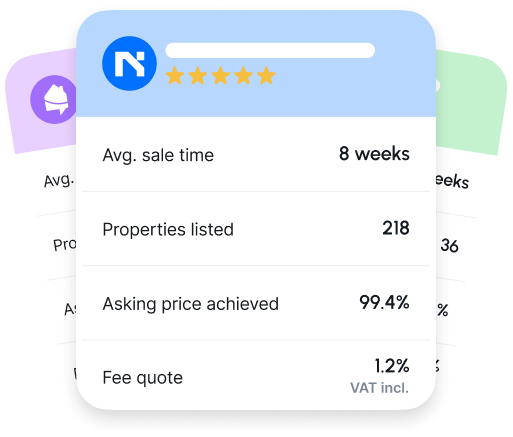
For anyone who is also selling a property as part of their plans, the performance of your estate agent matters considerably to the final financial outcome. According to GetAgent's research, the UK average estate agent fee is 1.18% plus VAT (1.42% including VAT), with fees varying by region from an average of 1.2% in Cardiff to 1.7% in London. Using GetAgent's free comparison tool lets you see which agents have the strongest performance selling homes in your area, so you can make a confident choice based on real data.
For a full breakdown of what you will pay a solicitor through the buying and selling process, our guide to conveyancing fees covers what to expect at each stage.
Frequently Asked Questions
How much is stamp duty on a second home in 2026?
In England and Northern Ireland, buying an additional residential property in 2026 usually means paying standard SDLT rates plus a 5% surcharge on each band. Standard rates run from 0% on the first £125,000 up to 12% above £1.5 million, meaning the combined rates for UK-resident buyers of additional homes range from 5% to 17%, depending on the purchase price. Non-UK residents may pay an additional 2% SDLT surcharge on top of these rates.
The 5% surcharge came into effect on 31 October 2024 following the Autumn Budget announcement. On a £350,000 additional property, the total SDLT bill for a UK-resident buyer comes to approximately £25,000, compared with £7,500 for the same property purchased as a main residence. You can calculate your exact liability using the HMRC SDLT calculator before proceeding with a purchase.
Does the 5% surcharge apply to buy-to-let purchases?
Yes. The 5% additional dwelling surcharge applies to any residential property purchase where you already own or have a beneficial interest in another residential property at the point of completion. There is no separate or reduced rate for buy-to-let purchases. The surcharge applies in the same way whether you are buying a holiday cottage, a rental investment, or a second home for personal use.
There is also no relief based on your intentions for the property once you own it. Your conveyancing solicitor will confirm the applicable rates based on the full details of your purchase and your existing property ownership before completion.
Can you get a refund of the higher SDLT rate?
Yes, in certain circumstances. If you paid the higher SDLT rate because you owned two properties at completion, typically because your previous main residence had not yet sold, and you subsequently sell that previous main residence within three years, you can apply to HMRC for a refund of the surcharge. In limited exceptional circumstances, HMRC may consider refunds where the previous main residence could not be sold within the usual three-year period.
The claim must be submitted within 12 months of the date of that sale, or within 12 months of the filing date of the original SDLT return, whichever is later. Your conveyancing solicitor can assist with making the claim on your behalf, or you can apply directly through the HMRC repayment service.
What counts as a second home for stamp duty purposes?
For SDLT purposes, a second home is any residential property you purchase where you already own or have a beneficial interest in another residential property anywhere in the world at the point of legal completion. This includes buy-to-let investments, holiday homes, properties in which you hold a share, and properties you own jointly with another person.
It also includes situations where you are completing on a new main residence before your existing one has been sold. The test is based on your ownership position at the date of completion, not at the exchange of contracts. Your conveyancing solicitor will review the full picture of your property interests before you complete.
Is there any way to avoid the additional property surcharge?
Genuine opportunities to avoid the surcharge are limited. Purchases below £40,000 are exempt, as are caravans, houseboats, and mobile homes. If you are replacing your main residence and your previous home was sold before you completed on the new one, standard rates apply rather than the surcharge. If you complete on a new main residence before your previous home sells, the surcharge applies at completion, though a refund is available if you sell within three years.
There is no relief based on the intended use of the second property. Attempting to reduce SDLT liability through artificial arrangements can result in HMRC penalties and interest. Always take advice from a conveyancing solicitor if you believe an exemption may apply.
How does 2nd home stamp duty work in Scotland?
In Scotland, the equivalent of SDLT is Land and Buildings Transaction Tax (LBTT), administered by Revenue Scotland. An Additional Dwelling Supplement (ADS) applies to purchases of second and additional residential properties. The ADS increased to 8% for transactions with an effective date on or after 5 December 2024, having previously stood at 6%.
Unlike the SDLT surcharge in England, which is applied band by band, the Scottish ADS is a flat 8% charged on the entire purchase price. On a £350,000 purchase, the ADS alone amounts to £28,000 in addition to the standard LBTT liability. For current LBTT rates and thresholds, visit the Revenue Scotland website or consult a solicitor qualified in Scottish property law.
How does second property stamp duty work in Wales?
In Wales, residential property purchases are subject to Land Transaction Tax (LTT), administered by the Welsh Revenue Authority. Higher residential LTT rates apply to additional properties in Wales, with rates ranging from 5% to 17% depending on the property price band. The current higher residential rates apply to transactions with an effective date on or after 11 December 2024.
LTT thresholds differ from those in England, and the higher-rate structure has changed more than once in recent years. It is important to verify the current rates directly with the Welsh Revenue Authority before making financial plans based on tax estimates. A conveyancing solicitor with experience in Welsh property transactions will advise on the precise liability for your purchase and help you plan for the full cost.
Does buying a property in someone else's name avoid the surcharge?
Not reliably, and attempting to do so can have serious legal and tax consequences. HMRC looks at beneficial ownership rather than just whose name appears on the title when applying the higher rates. Holding a property in trust for yourself, through a limited company, or through a nominee arrangement does not automatically exempt the transaction from the surcharge.
Some corporate purchases of residential property above £500,000 can fall within a flat 17% SDLT regime, although reliefs and exemptions may apply. There are potential implications under HMRC anti-avoidance rules as well. This is a complex area of tax law where specialist legal and tax advice is essential before making any arrangement designed to affect your SDLT position.
What happens to stamp duty when property is transferred during a divorce?
Transfers of property between separating spouses or civil partners can be exempt from SDLT in some circumstances, particularly where the transfer is made under a formal court order as part of a legal separation or divorce settlement. However, if the property carries a mortgage, SDLT may still be payable on the element of mortgage debt that transfers as part of the arrangement.
The rules depend on the specific terms of the transfer, the value of the mortgage, and the stage of the legal proceedings at the time. This is an area where family law and property tax law interact in complex ways, and you should take advice from both a family law solicitor and a conveyancing solicitor before proceeding with any property transfer during a separation.
Will I pay the second home surcharge if I am temporarily between properties?
If you complete on a new home before your previous home has sold, you will generally be charged the 5% surcharge at completion because you technically own two residential properties at that point. This is a common situation for anyone whose sale and purchase timings do not align perfectly.
A refund is available if you sell your previous main residence within three years of completing on the new one, and you must submit the refund claim to HMRC within 12 months of that sale, or within 12 months of the filing date of the original SDLT return, whichever is later. In limited exceptional circumstances, HMRC may consider refunds where the previous home could not be sold within the usual three-year period. Your conveyancing solicitor can advise on the timing implications before completion and assist with the refund claim once your previous home sells.
References
- Citizens Advice, What happens to your home when you separate
- GetAgent, Compare Estate Agents
- GetAgent, How Much are Conveyancing Fees in 2026?
- GOV.UK, Apply for a refund of the higher rates of Stamp Duty Land Tax
- GOV.UK, Calculate Stamp Duty Land Tax
- GOV.UK, Higher rates of Stamp Duty Land Tax for additional residential properties
- GOV.WALES, Land Transaction Tax rates and bands
- Revenue Scotland, The Additional Dwelling Supplement
FAQs
How much is stamp duty on a second home in 2026?
In England and Northern Ireland, buying an additional residential property in 2026 usually means paying standard SDLT rates plus a 5% surcharge on each band. Standard rates run from 0% on the first £125,000 up to 12% above £1.5 million, meaning the combined rates for additional homes range from 5% to 17%, depending on the purchase price. The 5% surcharge came into effect on 31 October 2024 following the Autumn Budget announcement. On a £350,000 additional property, the total SDLT bill comes to approximately £25,000, compared with £7,500 for the same property purchased as a main residence. You can calculate your exact liability using the HMRC SDLT calculator at gov.uk before proceeding with a purchase.
Does the 5% surcharge apply to buy-to-let purchases?
Yes. The 5% additional dwelling surcharge applies to any residential property purchase where you already own or have a beneficial interest in another residential property at the point of completion. There is no separate or reduced rate for buy-to-let purchases. The surcharge applies in the same way whether you are buying a holiday cottage, a rental investment, or a second home for personal use. There is also no relief based on your intentions for the property once you own it. Your conveyancing solicitor will confirm the applicable rates based on the full details of your purchase and your existing property ownership before completion.
Can you get a refund of the higher SDLT rate?
Yes, in certain circumstances. If you paid the higher SDLT rate because you owned two properties at completion, typically because your previous main residence had not yet sold, and you subsequently sell that previous main residence within three years, you can apply to HMRC for a refund of the surcharge. The claim must be submitted within 12 months of the date of that sale, or within 12 months of the filing date of the original SDLT return, whichever is later. Your conveyancing solicitor can assist with making the claim on your behalf, or you can apply directly through the HMRC repayment service at gov.uk.
What counts as a second home for stamp duty purposes?
For SDLT purposes, a second home is any residential property you purchase where you already own or have a beneficial interest in another residential property anywhere in the world at the point of legal completion. This includes buy-to-let investments, holiday homes, properties in which you hold a share, and properties you own jointly with another person. It also includes situations where you are completing on a new main residence before your existing one has been sold. The test is based on your ownership position at the date of completion, not at the exchange of contracts. Your conveyancing solicitor will review the full picture of your property interests before you complete.
Is there any way to avoid the additional property surcharge?
Genuine opportunities to avoid the surcharge are limited. Purchases below £40,000 are exempt, as are caravans, houseboats, and mobile homes. If you are replacing your main residence and your previous home was sold before you completed on the new one, standard rates apply rather than the surcharge. If you complete on a new main residence before your previous home sells, the surcharge applies at completion, though a refund is available if you sell within three years. There is no relief based on the intended use of the second property. Attempting to reduce SDLT liability through artificial arrangements can result in HMRC penalties and interest. Always take advice from a conveyancing solicitor if you believe an exemption may apply.
How does 2nd home stamp duty work in Scotland?
In Scotland, the equivalent of SDLT is Land and Buildings Transaction Tax (LBTT), administered by Revenue Scotland. An Additional Dwelling Supplement (ADS) applies to purchases of second and additional residential properties. The ADS was increased to 8% of the total purchase price in December 2024, having previously stood at 6%. Unlike the SDLT surcharge in England, which is applied band by band, the Scottish ADS is a flat 8% charged on the entire purchase price. On a £350,000 purchase, the ADS alone amounts to £28,000 in addition to the standard LBTT liability. For current LBTT rates and thresholds, visit the Revenue Scotland website or consult a solicitor qualified in Scottish property law.
How does the second property stamp duty work in Wales?
In Wales, residential property purchases are subject to Land Transaction Tax (LTT), administered by the Welsh Revenue Authority. Higher residential LTT rates apply to additional properties in Wales, with rates ranging from 5% to 17% depending on the property price band. The current higher residential rates apply to transactions with an effective date on or after December 2024. LTT thresholds differ from those in England, and the higher-rate structure has changed more than once in recent years. It is important to verify the current rates directly with the Welsh Revenue Authority at gov.wales before making financial plans based on tax estimates. A conveyancing solicitor with experience in Welsh property transactions will advise on the precise liability for your purchase and help you plan for the full cost.
Does buying a property in someone else's name avoid the surcharge?
Not reliably, and attempting to do so can have serious legal and tax consequences. HMRC looks at beneficial ownership rather than just whose name appears on the title when applying the higher rates. Holding a property in trust for yourself, through a limited company, or through a nominee arrangement does not automatically exempt the transaction from the surcharge. Corporate purchases of residential property above £500,000 also attract a flat 17% SDLT rate. There are potential implications under HMRC anti-avoidance rules as well. This is a complex area of tax law where specialist legal and tax advice is essential before making any arrangement designed to affect your SDLT position.
What happens to stamp duty when property is transferred during a divorce?
Transfers of property between separating spouses or civil partners can be exempt from SDLT in some circumstances, particularly where the transfer is made under a formal court order as part of a legal separation or divorce settlement. However, if the property carries a mortgage, SDLT may still be payable on the element of mortgage debt that transfers as part of the arrangement. The rules depend on the specific terms of the transfer, the value of the mortgage, and the stage of the legal proceedings at the time. This is an area where family law and property tax law interact in complex ways, and you should take advice from both a family law solicitor and a conveyancing solicitor before proceeding with any property transfer during a separation.
Will I pay the second home surcharge if I am temporarily between properties?
If you complete on a new home before your previous home has sold, you will generally be charged the 5% surcharge at completion because you technically own two residential properties at that point. This is a common situation for anyone whose sale and purchase timings do not align perfectly. A refund is available if you sell your previous main residence within three years of completing on the new one, and you must submit the refund claim to HMRC within 12 months of that sale. Your conveyancing solicitor can advise on the timing implications before completion and assist with the refund claim once your previous home sells.
Thinking about
selling your home?
Picking the right estate agent is vital for a successful sale. GetAgent makes choosing simple. Discover the best performing agents in your area.
- Free
- Data-driven
- No obligation
Thinking about
selling your home?
Picking the right estate agent is vital for a successful sale. GetAgent makes choosing simple. Discover the best performing agents in your area.
- Free
- Data-driven
- No obligation
Compare estate agents
It takes 2 minutes.





Get in touch
020 3608 6556
Our lines are closed
We are a company registered in England & Wales, company number 09428979.
Copyright © 2026 GetAgent Limited